
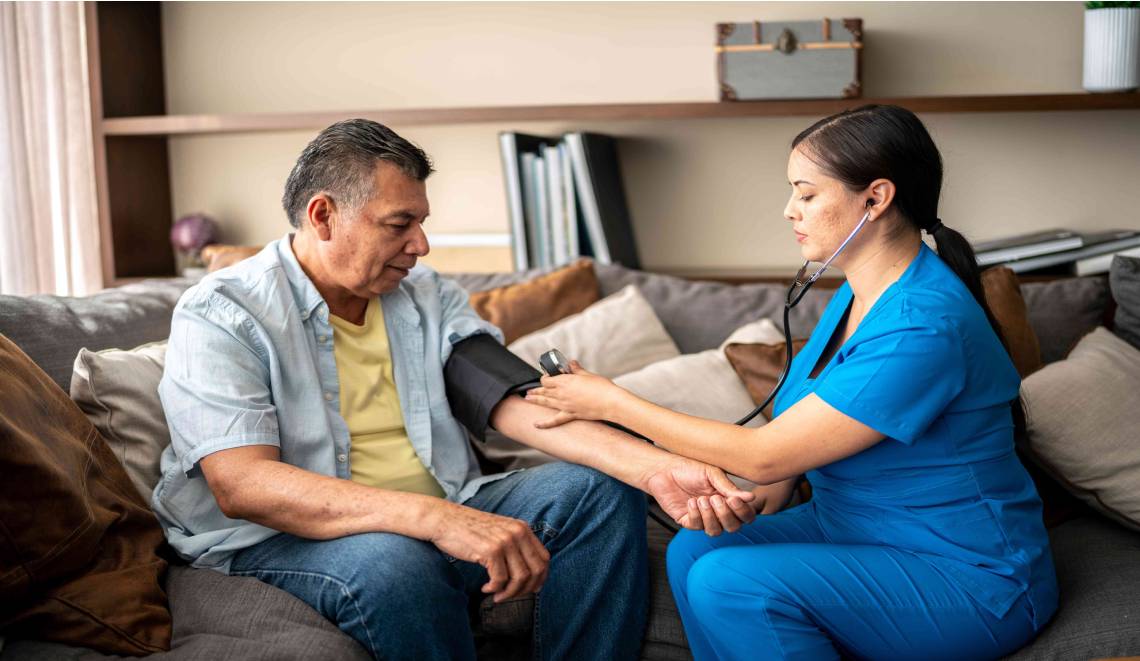
What really happens inside a clinical trial when a rare autoimmune condition is being carefully tracked over months or even years and how is patient safety quietly protected at every step?
When ANCA-associated vasculitis (AAV) is being examined in a clinical research setting, this question is felt at every level. Because behind each trial visit, lab result and follow-up call, a structured system has been put in place and through it, participants are continuously watched over while new treatments are being assessed.
Before going deeper, the scale of the condition being studied is worth understanding.
Through the National Organization for Rare Disorders (NORD), ANCA-associated vasculitis has been formally identified as a rare disease. An annual incidence of around 10–20 cases per million people has been documented, with variation noted across different regions and populations where the condition has been observed.
Source: NORD – Vasculitis Information
As it is rare and because it can involve multiple organs, including the kidneys, lungs, nerves and blood vessels, clinical trials for this condition are designed with very strict safety monitoring and long-term follow-up systems from the outset.
ANCA-associated vasculitides refer to a group of autoimmune conditions in which the body's immune system mistakenly turns against small blood vessels. When not properly controlled, this inflammation can gradually affect vital organs.
Within a clinical trial, the condition is observed in a controlled and carefully monitored setting. New medications or treatment approaches are evaluated with patient outcomes being held as the primary focus, while the risk of long-term damage is worked to be reduced at every step.
Because immune-modifying therapies are so often involved in this type of research, patient safety is placed at the center of the entire study process, not just at key milestones but continuously.
In ongoing research, particularly in cities like Houston, where advanced clinical research infrastructure has been established, safety is not approached as a single step or a box to be checked. It is maintained throughout.
Safety and follow-up in vasculitis clinical trials in Houston is built around one core idea: any shift in a participant's health status must be caught early and responded to without delay.
This includes:
Because ANCA-associated vasculitis can change in intensity over time, follow-up is not optional. It is a continuous process through which both the effectiveness and the safety of the study treatment are kept under observation.
Patient monitoring is carried out through a combination of scheduled clinical visits, laboratory testing and imaging when required.
During each follow-up appointment, several key checks are typically performed:
Between visits, symptom tracking is also conducted in many cases, either through scheduled calls or digital reporting tools.
This layered approach to monitoring helps ensure that even subtle changes are not overlooked.
Strict safety protocols are woven into every ANCA-associated vasculitis clinical trial. These are defined before the study begins and are reviewed and approved by regulatory authorities and ethics committees.
Some of the key safeguards include:
These measures ensure that if a participant shows signs of worsening condition or an unexpected reaction, action is taken without delay, not after the next scheduled visit.
Follow-up periods in ANCA-associated vasculitis trials tend to be extended by design.
Depending on the study, observation may continue for:
This extended duration is necessary because vasculitis is a relapsing condition. Symptoms may respond well to initial treatment and then return weeks or months later. Long-term observation is therefore essential for understanding the true impact of any therapy being tested.
Even after the main treatment phase has concluded, participants are often followed further to track disease stability and watch for any late effects that may emerge.
Houston has become an important location for clinical research, supported by strong medical institutions and access to specialized care across the region.
In the context of ANCA-associated vasculitis trials, this translates to several practical advantages:
This environment supports more structured safety monitoring and improves the quality and consistency of long-term follow-up data collected over the course of a study.
Several overlapping systems are relied upon to protect participants throughout a trial:
Together, these measures are designed to maintain a careful balance between scientific inquiry and the well-being of each person enrolled.
The goal is never solely to test a treatment. It is to do so without placing participants at unnecessary risk at any stage of the process.
Clinical research does not move forward through treatment testing alone. It is also supported by individuals who participate, contribute data or assist in research-related activities at the community level.
Biopharma Informatic is involved in advancing awareness of and participation in clinical research efforts particularly in areas where patient data and long-term observation are essential for meaningful scientific progress.
Exploring volunteering opportunities at Biopharma Informatic may be one way to contribute to ongoing work in rare autoimmune disease research, where every participant and every data point matters.
In ANCA-associated vasculitis research, safety and follow-up are never pushed to the margins, they are built into the process from the ground up. From the time initial screening is carried out through to long-term observation, participants are kept under continuous watch so that neither scientific accuracy nor personal well-being is allowed to slip.
As research in cities like Houston is steadily advanced, structured clinical trials continue to be seen as among the most important channels through which understanding and treatment outcomes for this rare autoimmune condition are improved.
For those interested in being part of this work, participation or volunteering opportunities offered through Biopharma Informatic may be explored as a way through which ongoing scientific efforts are supported and through which therapies that could genuinely matter to future patients are helped along.
What does safety and follow-up in vasculitis clinical trials in Houston involve?
It involves continuous monitoring of symptoms, lab tests and organ function to ensure patient safety throughout the study period.
Why is safety monitoring important in vasculitis research?
Because treatments affect the immune system, careful monitoring helps detect side effects early and prevents complications.
How are patients monitored during vasculitis clinical trials?
Through regular clinic visits, blood and urine tests, imaging when needed and symptom tracking between appointments.
How long is follow-up in vasculitis clinical trials typically conducted?
Follow-up may last from several months to multiple years depending on the trial design and disease response.
What measures ensure patient safety in ongoing vasculitis research?
Safety is ensured through strict protocols, regular testing, emergency response systems and independent safety reviews.